
Brain Tumour Surgery Sydney
Specialised management and treatment options for brain tumours.
Patients with primary brain tumours
Dr Jacob Fairhall has extensive experience in providing specialised care and treatment for several different types of brain tumours. As an experienced brain surgeon, Dr Fairhall works alongside his patients to provide thorough assessments and help identify the most appropriate management and treatment options for each person.
Completing a fellowship in neuro-oncology and minimally invasive surgery at the Centre for Minimally Invasive Neurosurgery, the care delivered by Dr Fairhall is evidence-based and patient-focused, providing comprehensive support and treatment that is tailored to specific needs to move towards optimal outcomes. Dr Fairhall works in a multidisciplinary setting to provide the best care.
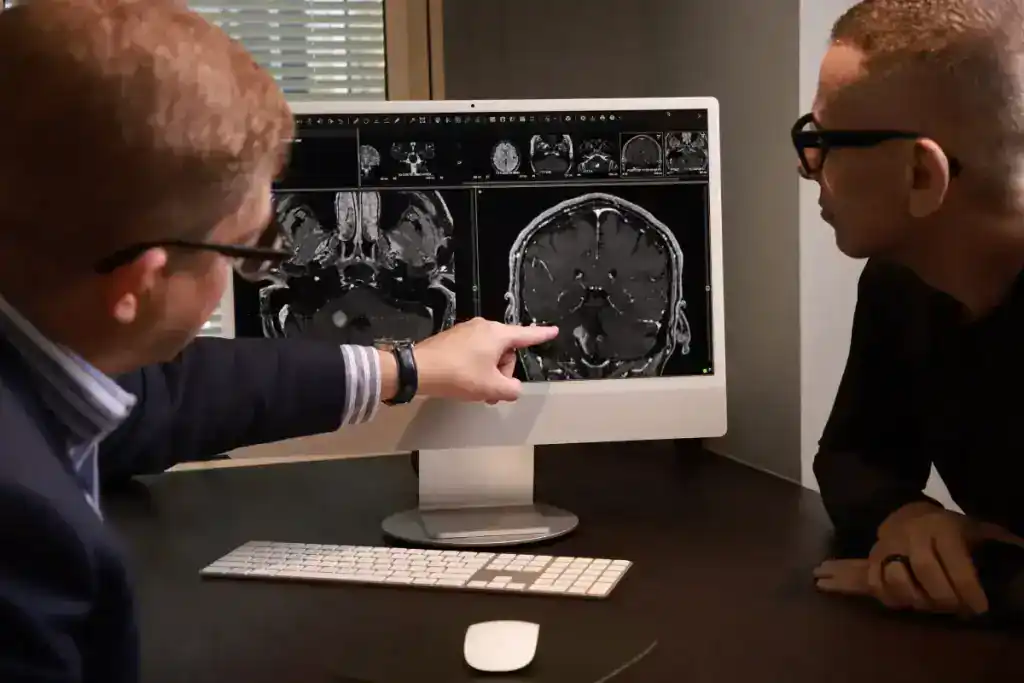
Meningioma
Meningiomas are usually slow-growing, benign tumours that form on the protective layers covering the brain. While they are often detected incidentally, they can cause symptoms depending on their size and location. In many cases, surgery is the preferred treatment.
Dr Fairhall offers careful assessment and, when needed, surgical management to carefully remove the tumour cells. His experience helps patients navigate these diagnoses with clarity and confidence, discussing all treatment options thoroughly.
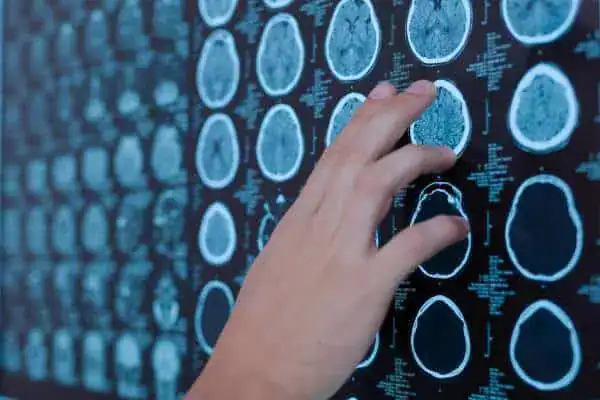
Glioma
Gliomas are tumours that develop within the brain tissue itself and can range from low-grade, slow-growing tumours to more aggressive forms such as glioblastoma (GBM). Managing gliomas may require a combination of surgery, radiation therapy, and chemotherapy, and the involvement of a multidisciplinary team.
Dr Fairhall is experienced in both surgical treatment and collaborative care, working alongside oncologists and neurologists to offer personalised, compassionate management aimed at achieving the best possible outcomes.
Pituitary Tumour and Anterior Skull Base Tumours
Pituitary and anterior skull base tumours affect the critical structures at the base of the brain and can disrupt important hormonal and neurological functions. These tumours often require a team approach, involving endocrinologists, oncologists, and ENT surgeons.
Dr Fairhall specialises in the surgical management of these tumours, frequently performing minimally invasive endoscopic procedures when suitable. He carefully coordinates with other specialists with the aim of providing personalised treatment to each patient.
Metastatic Lesions
When cancer spreads from its original site to another part of the body, the resulting growth is called metastatic cancer or a metastasis. Importantly, the cancer cells in the new location retain the characteristics of the primary cancer. For example, if cancer that began in the breast spreads to the brain, the lesion is still referred to as metastatic breast cancer.
Cancer spreads through a multi-step process. This may involve cancer cells entering and traveling through blood vessels or lymphatic channels, and forming new blood vessels (angiogenesis) to support their growth at distant sites. The management of metastatic disease depends on several factors, including the type and stage of the primary cancer, the location and extent of metastases, and the patient’s symptoms.
Treatment typically requires a multidisciplinary approach, involving collaboration among oncologists, surgeons, and other specialists, to help reach the best possible outcomes for the patient. Often, skilled surgery is necessary to help relieve pressure, clarify diagnosis and reduce reaction in the brain.
Acoustic Neuroma
Acoustic neuromas are noncancerous, slow-growing tumours that develop within the ear. They are also known as vestibular Schwannomas as they arise from cells called Schwann cells, which envelop nerve fibres. This form of tumour impacts the nerve that travels between the inner ear and brain, which plays a vital role in balance and hearing.
Acoustic neuromas are generally not life-threatening and typically do not invade other tissues. However, as they grow, they may press on other structures such as the brainstem, which is why symptoms may occur. Symptoms may include worsening hearing loss, decreased balance and stability, facial weakness, and headaches. Management requires experienced consideration of surgery, radiotherapy and observation. It is important to have a balanced approach focussed both on managing the tumour and minimising facial nerve issues.
Book a consultation with Dr Jacob Fairhall
To receive further information and to organise an initial consultation with Dr Fairhall, please contact our team.